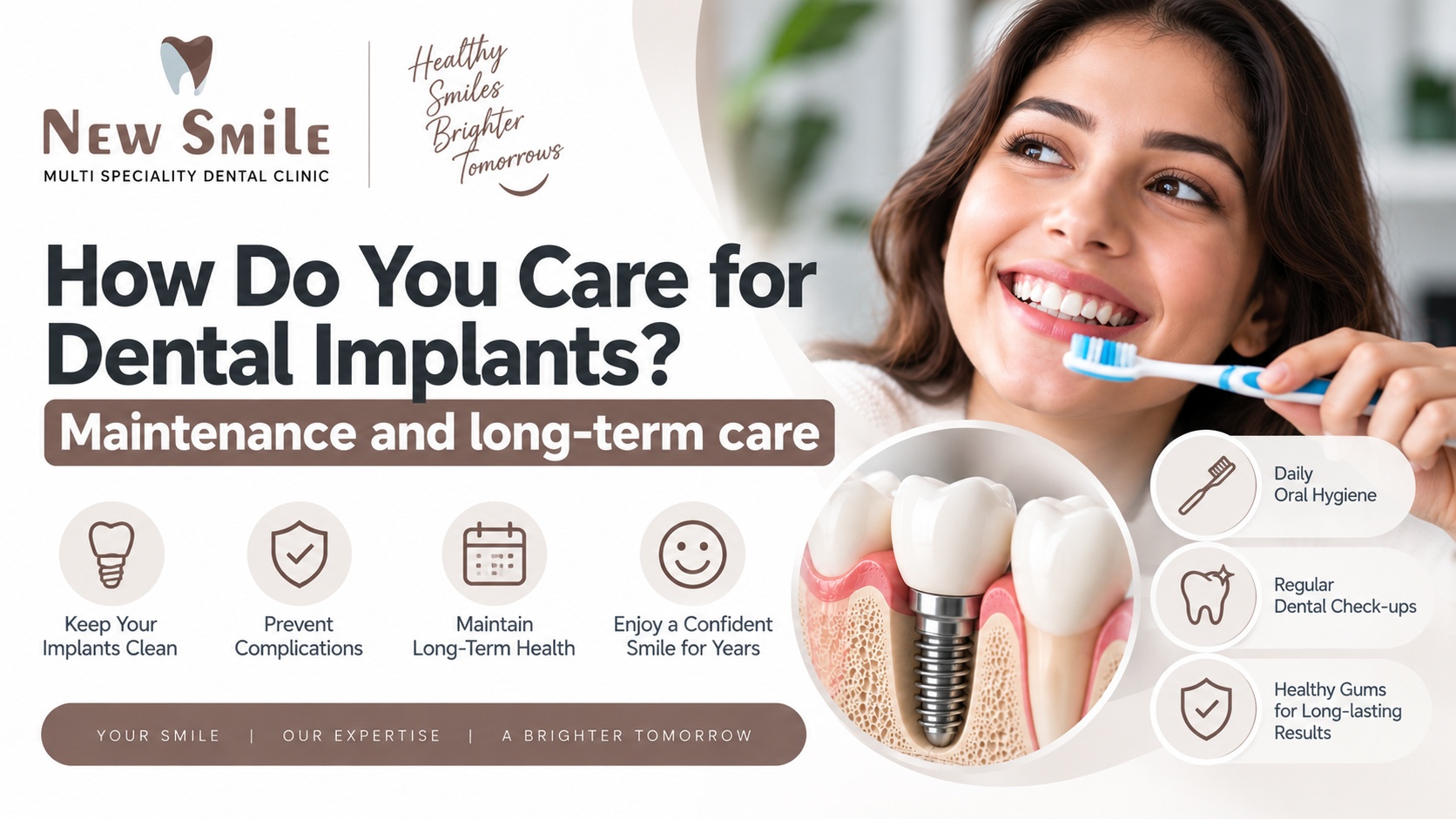
Quick Clinical Answer
How do you care for dental implants? Dental implants require thorough daily brushing with a soft-bristled brush, non-abrasive fluoride toothpaste, daily interdental cleaning with coated brushes or specialised floss, and scheduled clinical checkups every 3 to 6 months. While artificial restorations cannot develop tooth decay, the living gums and supporting bone remain vulnerable to bacterial plaque, which can cause inflammatory conditions like peri-implant mucositis and peri-implantitis.
Restoring your smile with modern implant dentistry is one of the most reliable, transformative procedures in restorative care. For patients seeking the best dental implant in Ahmedabad, understanding how to maintain the restoration after treatment is just as crucial as the precision of surgical placement. With dedicated home care and regular preventive evaluations at New Smile Multispeciality Dental Clinic, your dental implants in Ahmedabad can remain stable, functional, and aesthetically pleasing for decades.
Why Is Dental Implant Maintenance Important?
A dental implant functions differently from a biological tooth. Natural teeth are suspended within the jawbone by a microscopic shock absorber known as the periodontal ligament, which contains a rich blood supply and sensory nerve fibres. A dental implant, however, is directly osseointegrated into the jawbone. Its surrounding biological defence mechanism relies entirely on a delicate band of gum tissue known as the peri-implant soft-tissue seal.
When food debris and bacterial plaque accumulate around the implant collar, microorganisms penetrate this protective gum barrier. This triggers an inflammatory cascade that can progress rapidly if left unmanaged:
1. Soft-Tissue Preservation
Maintains a tight, infection-resistant seal around the abutment post, preventing bacterial migration into deeper tissues.
2. Crestal Bone Protection
Shields supporting jawbone from chronic bacterial toxins, preventing progressive bone resorption around titanium threads.
3. Mechanical Integrity
Detects early prosthetic wear, loose retention screws, or occlusal imbalances before structural crown failure occurs.
4. Reversible Interventions
Enables your clinician to reverse superficial inflammation (mucositis) early, avoiding invasive surgical procedures later.
Consistent oral hygiene substantially reduces biological complications. While no cleaning regimen can guarantee absolute immunity against every clinical variable, structured daily care remains the single most reliable factor within your control.
How to Care for Dental Implants Every Day
Your daily hygiene protocol should be adapted to the type of restoration you have—whether that is an individual crown, an implant-supported bridge, or a full-arch implant denture.
1. Brushing Twice Daily
Brush methodically for at least two minutes, twice each day. As recommended by the American Dental Association (ADA), pay special attention to the cervical margin where the crown meets the gumline, ensuring all outer, inner, and chewing surfaces are thoroughly cleaned.
2. Selecting Non-Abrasive Toothpaste
Use a low-abrasive fluoride toothpaste. Avoid whitening toothpastes containing coarse abrasives such as baking soda, silica granules, or activated charcoal. These harsh agents can scratch polished porcelain, acrylic components, and exposed titanium margins, creating microscopic grooves that attract bacterial biofilm.
3. Meticulous Gumline Cleaning
Hold your brush at a 45-degree angle toward the gum margin. Use gentle, vibratory, circular strokes rather than harsh horizontal scrubbing. This dislodges plaque from the sulcus without traumatising the delicate soft-tissue cuff.
4. Cleaning Implant Bridges and Full-Arch Restorations
If you wear an implant-supported fixed bridge or full-arch hybrid prosthesis, plaque naturally collects in the space between the restoration framework and the underlying gums. Specialised tools—such as stiffened-end floss threaders, tufted expanding floss, and sulcus brushes—are essential for sweeping beneath the prosthesis daily.
5. Judicious Use of Mouth Rinses
Antibacterial or therapeutic mouth rinses may be recommended by your dental team as an adjunct to mechanical cleaning. However, liquid rinses cannot disrupt dense biofilm on their own. Avoid high-alcohol mouthwashes that cause mucosal dryness unless specifically advised by your dentist.
How to Brush Dental Implants Correctly
Excessive brushing force does not lead to cleaner teeth; instead, it causes gum recession, exposing the implant abutment or metallic collar. Follow these professional step-by-step brushing guidelines:
1 Use an ultra-soft manual or sonic brush: Choose soft, end-rounded nylon filaments that flex easily without scratching restorative materials or irritating delicate gum margins.
2 Maintain a 45-degree angle: Position the brush filaments precisely at the junction where the implant crown emerges from the gum tissue.
3 Execute gentle circular strokes: Dislodge soft plaque using gentle, micro-circular or sweeping movements away from the gums across all facial, lingual, and biting surfaces.
4 Clean adjacent natural teeth and restorations: Periodontal bacteria migrate freely between teeth and implants. Maintaining health across natural dentition or teeth with root canal treatments ensures bacteria cannot colonize your implant site.
5 Consider a pressure-sensing powered brush: Electric or sonic toothbrushes with built-in pressure warnings help ensure thorough plaque removal while preventing excessive manual pressure.
How to Clean Between Dental Implants
Because dental implant crowns emerge from a circular post rather than natural, tapered roots, they create unique triangular spaces (embrasures) at the gumline. A toothbrush alone cleans only about 60% of the surface area. The remaining 40% requires dedicated interdental cleaning:
- Plastic-Coated Interdental Brushes: Standard interdental brushes have a bare metal wire at their core that can scratch titanium components. Always use brushes with plastic-coated wire stems. Never force a brush into a tight interdental space; select the appropriate diameter for each gap as recommended by your clinician.
- Specialised Implant Floss and Tape: Stiffened-end floss or spongy expanding floss wraps smoothly around the implant crown. Curve the floss around the base in a gentle "shoe-shine" motion to sweep away interproximal plaque. Avoid snapping thin conventional floss downward, as this can tear the peri-implant mucosal attachment.
- Water Flossers (Oral Irrigators): Water flossers use a pulsating water stream to flush out loose debris and disrupt unattached bacteria beneath bridges and around implant collars. While helpful, water flossing is an adjunctive therapy and should be used alongside physical contact cleaning rather than as a substitute.
What Should You Avoid When Caring for Dental Implants?
Maintaining an implant involves protecting it from mechanical stress and harmful habits. Avoid the following common pitfalls:
- Aggressive Brushing: Scrubbing forcefully with stiff bristles causes irreversible gum recession and exposes restoration margins.
- Ignoring Bleeding Gums: Bleeding during brushing or eating is an early warning of bacterial inflammation, not a normal occurrence.
- Skipping Clinical Checkups: Early peri-implant bone loss is painless and can advance silently if checkups are missed.
- Smoking and Tobacco Products: Tobacco smoke impairs microvascular blood flow, weakens local immune defence, and dramatically raises the risk of implant failure.
- Abrasive Powders and Pastes: Coarse whitening powders scratch restoration surfaces, creating rough areas where plaque adheres more easily.
- Using Your Teeth as Tools: Chewing ice, cracking nuts, biting fingernails, or opening packaging can fracture porcelain crowns or loosen retention screws.
- Ignoring Movement or Clicking: Any sense of looseness or change in your bite requires immediate clinical assessment before component damage occurs.
How Often Should You Visit a Dentist After Dental Implant Treatment?
Follow-up schedules are individualised based on each patient’s risk profile, systemic health, and oral hygiene history. While a six-month review interval is common, patients with a history of periodontitis, diabetes, or tobacco use often benefit from visits every three to four months.
During a professional implant maintenance visit, your dental team will:
- Assess peri-implant gum health, checking for swelling, redness, or bleeding on gentle probing.
- Perform gentle subgingival debridement using specialised non-metallic instruments (such as carbon-fibre, titanium, or PEEK scalers) that preserve implant surfaces.
- Verify bite alignment to prevent excessive, traumatic chewing forces on the restoration.
- Take targeted digital radiographs when clinically indicated to monitor crestal bone levels around the implant fixture.
Dental Implant Cleaning at Home vs Professional Maintenance
Effective implant care relies on the partnership between daily home hygiene and regular professional clinical care. Neither can replace the other:
| Aspect | Home Care | Professional Maintenance |
|---|---|---|
| Frequency | Twice daily (morning and night). | Every 3 to 6 months, determined by individual risk. |
| Primary Focus | Disrupting soft bacterial biofilm and clearing loose debris. | Removing mineralised tartar (calculus) and evaluating tissue health. |
| Tools Used | Soft toothbrushes, coated interdental brushes, implant floss, water flossers. | Titanium/PEEK scalers, glycine powder air polishers, diagnostic probes. |
| Coverage Area | Accessible crown surfaces, gum margin, interproximal spaces. | Subgingival pockets, framework undersides, non-visible margins. |
| Health Check | Self-monitoring for pain, visible redness, bleeding, or looseness. | Gentle periodontal probing, bite analysis, and radiographic evaluation. |
| Issue Detection | Notices symptoms only after visible inflammation or discomfort occurs. | Detects asymptomatic bone resorption, screw loosening, and micro-wear early. |
Warning Signs That Your Dental Implant Needs Attention
A healthy dental implant should feel completely stable, comfortable, and natural. If you notice any of the following warning signs, contact your dentist promptly:
Contact Your Dental Clinic If You Notice:
- Persistent redness or swelling in the gums surrounding the implant crown.
- Bleeding when brushing, flossing, or eating, particularly if it lasts more than a few days.
- Pus discharge or an unpleasant taste coming from around the implant site.
- New or worsening discomfort when chewing or pressing on the restoration.
- Gum recession that reveals the grey titanium collar or abutment joint.
- A feeling of looseness or movement when eating or speaking.
- A change in how your teeth meet when biting down.
A feeling of movement does not necessarily mean the implant fixture has failed to integrate with the bone. In many cases, it simply indicates that the retention screw securing the crown has worked loose, or the dental cement has weakened. However, prompt professional evaluation is essential to prevent secondary damage to the internal fixture threads.
Emergency Note: Rapidly expanding facial swelling, difficulty swallowing, or laboured breathing requires immediate emergency medical care.
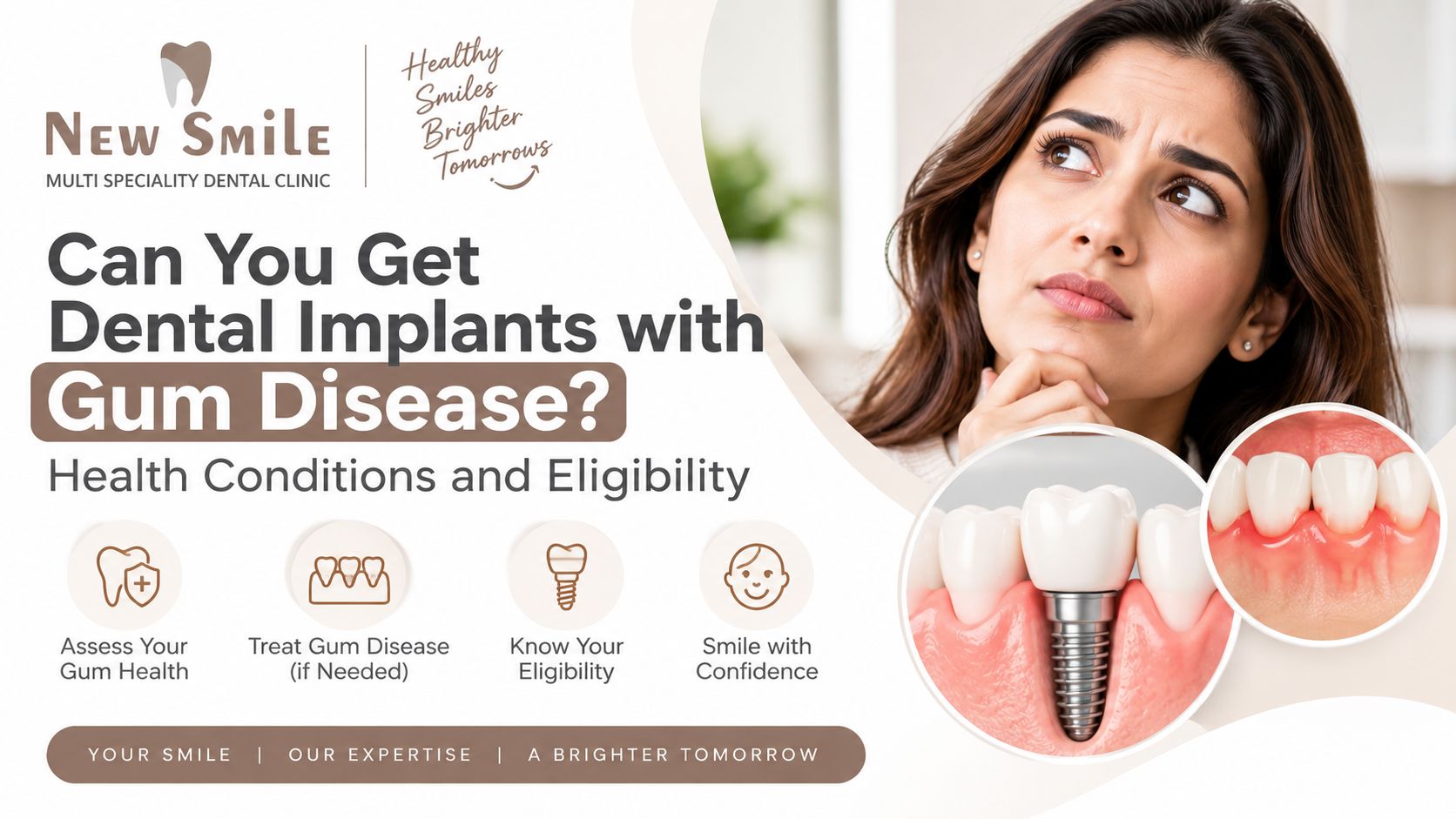
What Is Peri-Implantitis?
Peri-implant diseases are inflammatory conditions caused by bacterial biofilm accumulating around dental implants, extensively classified by clinical consensus published in the National Library of Medicine (NIH). They are categorised into two distinct clinical stages:
Stage 1: Peri-Implant Mucositis
An inflammatory condition limited strictly to the soft gum tissue around the implant, characterised by redness, swelling, and bleeding on gentle probing. Crucially, there is no loss of supporting bone. Peri-implant mucositis is fully reversible with professional clinical debridement and improved daily home care.
Stage 2: Peri-Implantitis
When mucositis goes untreated, bacterial inflammation extends deeper, resulting in progressive resorption of the crestal jawbone supporting the implant. Deep peri-implant pockets develop, creating an ideal environment for anaerobic bacteria. Peri-implantitis cannot be resolved with home care alone; it requires professional clinical debridement, antimicrobial therapy, and, in advanced cases, corrective bone-grafting or surgical intervention.
How Long Do Dental Implants Last With Proper Care?
Dental implants are among the most reliable restorative treatments available, with clinical studies documenting success rates above 90–95% over 10 to 15 years under proper maintenance protocols. However, it is important to distinguish between the individual components that make up the restoration:
- The Implant Fixture (Post): The titanium or zirconia post osseointegrated into your jawbone can remain secure for decades, provided the surrounding bone and gums remain free from inflammatory disease.
- The Abutment and Screw: These connecting components experience continuous chewing forces. Over a decade or more, screws may occasionally require retightening or replacement due to normal mechanical fatigue.
- The Prosthetic Crown: Visible crowns crafted from porcelain or zirconia endure daily biting forces. Depending on chewing habits and factors like teeth grinding (bruxism), crowns typically last 10 to 15 years before needing refurbishment, repolishing, or replacement.
Does Smoking Affect Dental Implant Health?
Extensive dental research shows that smoking is one of the leading risk factors for peri-implant complications. Nicotine causes vasoconstriction—the narrowing of tiny blood vessels in the gums—which reduces blood flow, oxygen, and nutrient delivery to peri-implant tissues.
This reduced circulation suppresses local immune defences, slows healing, and masks the early warning sign of bleeding gums, allowing bone loss to advance unnoticed. While smoking does not automatically rule out implant treatment, patients who use tobacco face higher rates of peri-implantitis and implant failure. Exploring smoking cessation options significantly improves long-term implant outcomes.
Can People With Diabetes Maintain Dental Implants Successfully?
Yes, patients with diabetes can safely receive and maintain dental implants, provided their blood sugar levels are well controlled. Healthy glycaemic regulation (reflected by a stable HbA1c level) is essential for bone metabolism, collagen formation, and fighting bacterial infection.
When blood glucose is well managed, implant survival rates are comparable to those in non-diabetic patients. However, poorly managed diabetes impairs healing and increases susceptibility to peri-implant infections. Close collaboration between your physician and dental team, combined with a dedicated checkup schedule, ensures your implants remain healthy.
Dental Implant Maintenance Cost in Ahmedabad
Routine maintenance for dental implants in Ahmedabad varies depending on the clinical requirements of each case, rather than following a single fixed price. Key factors influencing maintenance costs include:
- Type of restoration: Maintaining a single crown requires different clinical time and instrumentation than servicing a multi-unit bridge or full-arch prosthesis.
- Level of cleaning needed: Routine preventive scaling differs in scope from subgingival biofilm debridement using advanced air-polishing systems.
- Diagnostic radiographs: Digital X-rays taken to check bone levels are billed individually as needed.
- Prosthetic adjustments: Replacing worn retention screws, resealing screw access channels, or fabricating a custom nightguard for clenching involve separate component fees.
Investing in regular preventive checkups is significantly more economical than the complex surgical procedures needed to treat advanced peri-implantitis or replace a failed implant.
How to Choose a Dental Implant Clinic in Ahmedabad
Selecting a clinic for your implant treatment or ongoing maintenance requires assessing both clinical expertise and post-treatment care standards:
- Clinical qualifications: Look for dentists with recognized postgraduate training in implantology, periodontology, or prosthodontics.
- Diagnostic technology: A modern practice should have on-site 3D CBCT imaging and digital scanning for precise treatment planning.
- Focus on preventive care: A quality clinic takes the time to teach you bespoke home care techniques and provides clear maintenance protocols.
- Structured follow-up care: Choose a clinic with an established recall system to monitor your restoration over the long term.
Dental Implant Care at New Smile Multispeciality Dental Clinic
At New Smile Multispeciality Dental Clinic in Ahmedabad, our commitment to your oral health continues well beyond the day your implant is placed. We believe that long-term clinical success requires thorough patient education, precise clinical care, and consistent follow-up reviews.
Whether you are exploring missing-tooth replacement options or need a detailed assessment of an existing restoration, our team provides personalized evaluations tailored to your individual needs. We help you establish an effective daily home-care routine and provide gentle professional maintenance to keep your smile healthy.
Frequently Asked Questions About Dental Implant Care
How do you care for dental implants?
Caring for dental implants requires brushing twice daily with a soft-bristled brush, cleaning between teeth daily using plastic-coated interdental brushes or implant floss, and attending clinical checkups every 3 to 6 months.
Do dental implants need to be brushed every day?
Yes. Plaque biofilm adheres to implant crowns and titanium collars just as it does to natural teeth. Daily brushing is essential to prevent gum inflammation.
Can you use a normal toothbrush on dental implants?
Yes, as long as it has soft or ultra-soft bristles. Medium or stiff bristles should be avoided as they can abrade the gum tissue and cause recession.
What toothpaste is suitable for dental implants?
Choose a standard non-abrasive fluoride toothpaste. Avoid gritty whitening pastes, charcoal formulas, or smoker’s pastes that can scratch ceramic restorations and metal margins.
How do you floss around dental implants?
Use specialised thick, spongy implant floss or an interdental threader. Curve the floss around the crown base in a gentle shoe-shine motion. Never snap thin floss forcefully down against the gum seal.
Can dental implants get infected?
Yes. While artificial posts cannot decay, the surrounding gums and supporting bone can develop bacterial infections known as peri-implant mucositis and peri-implantitis.
How often should dental implants be professionally checked?
Most patients should attend reviews every six months. Patients with risk factors such as previous periodontal disease, smoking, or diabetes may require visits every 3 to 4 months.
What are the signs of dental implant failure?
Key signs include mobility or looseness of the implant, persistent pain or throbbing, ongoing bleeding and swelling, pus discharge, or progressive bone loss on X-rays.
Can dental implant crowns become loose?
Yes. A crown can become loose if the internal retention screw loosens or the dental cement weakens. This is typically a mechanical issue rather than fixture failure, but it requires prompt professional adjustment.
How long do dental implants last?
With consistent oral hygiene and regular professional reviews, the titanium fixture can last several decades. The visible prosthetic crown typically lasts 10 to 15 years before requiring renewal due to normal wear.
Does smoking affect dental implants?
Yes. Smoking reduces blood flow to the gums, slows healing, impairs the immune response against plaque bacteria, and significantly raises the risk of peri-implantitis.
Can people with diabetes have dental implants?
Yes. When blood sugar levels are well controlled, individuals with diabetes achieve implant success rates comparable to non-diabetic patients.
Is professional cleaning necessary for dental implants?
Yes. Home brushing cannot remove calcified tartar (calculus) that forms below the gumline. Professional cleaning using non-scratching instruments is essential to protect the gum seal.
Where can I find dental implant care in Ahmedabad?
You can contact New Smile Multispeciality Dental Clinic in Ahmedabad to schedule a clinical evaluation, bespoke hygiene consultation, and preventive implant review.
Conclusion
Long-term dental implant success is built on consistent daily oral hygiene, careful gum maintenance, and scheduled professional evaluations. By using soft-bristled brushes, non-abrasive toothpastes, and plastic-coated interdental aids, you protect the delicate soft-tissue seal that guards your restoration against bacterial infection. Being alert to early warning signs—such as bleeding, swelling, or looseness—allows for prompt, conservative treatment before supporting bone is affected.
For patients seeking guidance or an assessment of their dental implants in Ahmedabad, New Smile Multispeciality Dental Clinic provides thorough clinical evaluations and personalized care plans. Protecting your implants today ensures they continue to deliver confident function and a natural-looking smile for years to come.
Schedule Your Dental Implant Review
Have questions about maintaining your dental implants or noticed changes around your gumline? Consult our clinical team for personalized hygiene advice and professional preventive care.
New Smile Multispeciality Dental Clinic • Ahmedabad, Gujarat
Book an Appointment