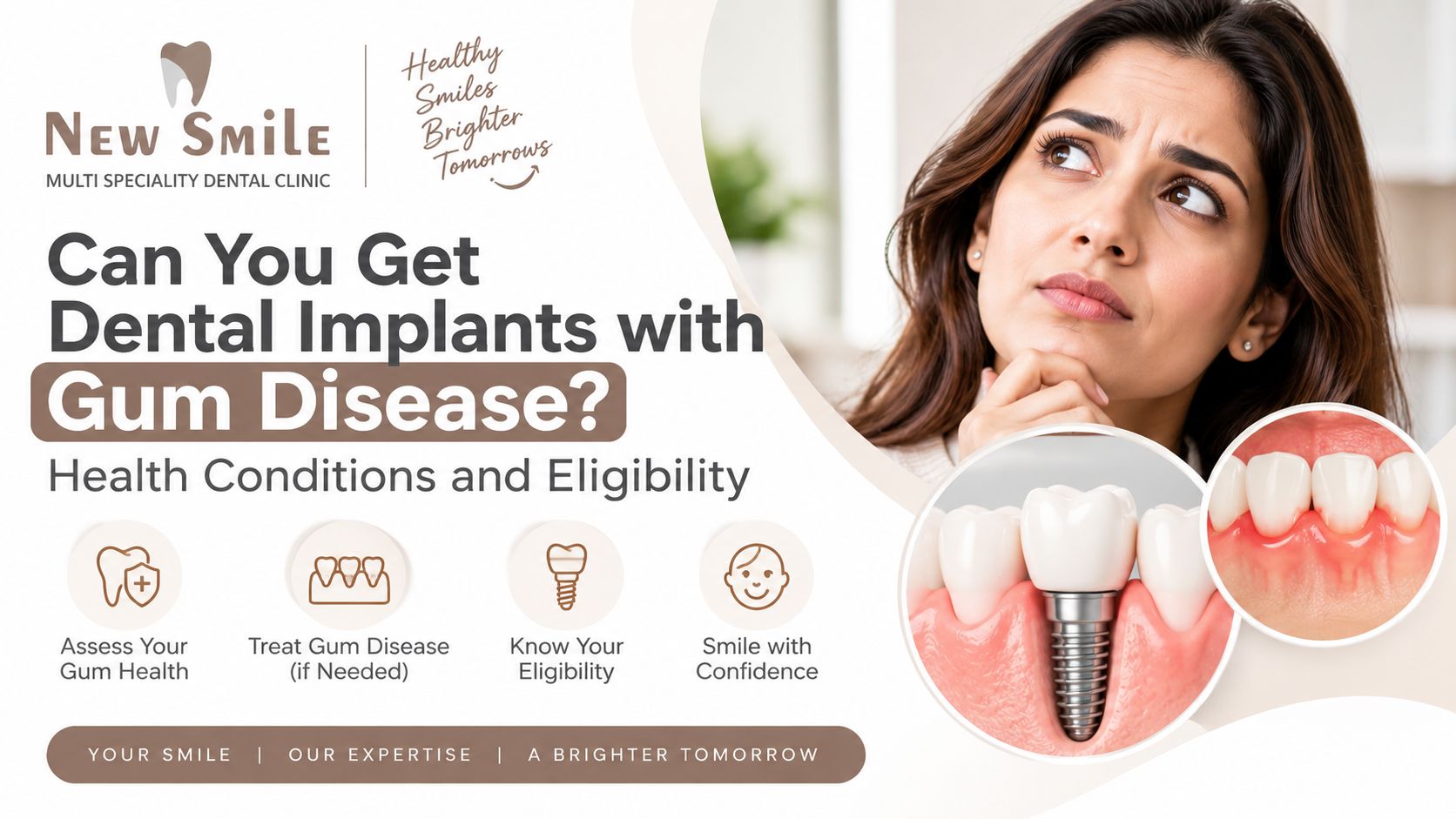
Direct Clinical Answer: Can you get dental implants with gum disease? Yes, many people with a history of gum disease can successfully receive dental implants, but active periodontal disease must be treated, controlled, and stabilised first. Placing dental implants in the presence of active bacterial infection significantly increases the risk of early failure and peri-implant diseases. Eligibility depends on periodontal stability, remaining bone volume, systemic health, and daily plaque control.
Losing teeth to advanced periodontal disease is a common concern among adult patients. When considering permanent tooth replacement, the foremost question is often whether previous gum complications rule out restorative therapy. For individuals exploring the best dental implant in Ahmedabad, understanding how periodontal tissues interact with titanium implants is the essential starting point. At New Smile Multispeciality Dental Clinic, careful periodontal assessment forms the foundation of every restorative plan, ensuring that your gums and underlying jawbone can support a lasting smile with dental implants in Ahmedabad.
Can You Get Dental Implants with Gum Disease?
The short answer is nuanced: having had gum disease in the past does not automatically disqualify you from dental implant treatment, but having active, uncontrolled gum disease does require preliminary treatment.
Dental implants rely on direct structural and functional connection with living bone—a biological process known as osseointegration. If active periodontal bacteria remain present in your mouth, these pathogens can migrate to the surgical site, colonise the newly placed implant surface, and disrupt both initial healing and long-term bone anchorage.
According to clinical research documented by the American Academy of Periodontology (AAP), periodontal stability prior to implant placement significantly improves implant survival rates. Suitability is determined through a comprehensive clinical assessment evaluating:
- The current activity and severity of periodontal pocketing
- The volume, density, and dimensional contour of remaining jawbone
- Personal commitment to daily plaque control and interdental cleaning
- Systemic health conditions (such as diabetes) and lifestyle factors like smoking
- A structured plan for ongoing clinical maintenance and monitoring
No ethical clinician can guarantee universal eligibility or permanent success without an in-person clinical examination, diagnostic periodontal charting, and 3D radiographic assessment.
What Is Gum Disease?
Gum disease (periodontal disease) is a chronic inflammatory condition caused by bacterial biofilm (plaque) accumulating along and beneath the gumline. Clinically, it is divided into two primary stages:
1. Gingivitis
The early, reversible stage of gum disease. Inflammation is limited to the superficial gingival tissues. Gums may appear red, puffy, and bleed during brushing or flossing. The underlying bone and connective tissue attachment remain completely intact.
2. Periodontitis
The advanced, destructive form of gum disease. When gingivitis is left untreated, bacterial toxins and the body's own inflammatory response break down the periodontal ligament and alveolar jawbone supporting the teeth. Pathological spaces called "periodontal pockets" form, harbouring harmful anaerobic bacteria that cannot be removed by ordinary toothbrushing.
Common warning signs of periodontal disease include:
- Bleeding gums during brushing, flossing, or eating hard foods
- Persistent bad breath (halitosis) or an unpleasant taste in the mouth
- Swollen, tender, or purplish-red gums
- Receding gums that make teeth appear visibly longer
- Loosening of teeth or widening gaps between teeth
- Changes in the way your teeth fit together when you bite
Periodontitis frequently advances quietly without significant pain. Many individuals remain unaware of progressive bone loss until teeth become noticeably loose. Visual symptoms alone cannot confirm the severity of disease; a detailed periodontal probing examination is essential.
Why Does Gum Health Matter for Dental Implants?
While dental implants are made of biocompatible titanium or zirconia and cannot develop dental cavities, they depend heavily on the health of the surrounding biological tissues:
- The Peri-Implant Mucosal Seal: Natural teeth possess periodontal fibres that insert directly into the tooth cementum. Implants lack these direct fibre insertions; instead, gum tissue forms a circular collar around the abutment. This makes the tissue attachment around an implant more delicate and vulnerable to bacterial penetration.
- Alveolar Bone Support: The implant fixture must be anchored in solid, healthy jawbone. Untreated periodontal pathogens break down bone architecture, leaving insufficient volume for stable implant placement.
- Bacterial Reservoirs: If active periodontitis persists around natural teeth, the periodontal pockets act as bacterial reservoirs. Pathogenic bacteria readily migrate across the mouth, colonising the implant site and triggering inflammatory conditions.
As highlighted in consensus reports by the American Dental Association (ADA), just as natural teeth can develop gingivitis and periodontitis, implants can develop peri-implant diseases:
- Peri-Implant Mucositis: A reversible inflammatory lesion confined to the soft gum tissue around an implant, characterised by bleeding on gentle clinical probing without bone loss.
- Peri-Implantitis: A progressive inflammatory condition that destroys the supporting jawbone around an osseointegrated implant, which can ultimately lead to implant loss if not professionally treated.
What Happens If You Get Dental Implants While Gum Disease Is Active?
Placing a dental implant into an infected or actively inflamed oral environment introduces serious clinical complications:
- Impaired Osseointegration: High levels of bacterial endotoxins and systemic inflammatory mediators interfere with bone-forming cells (osteoblasts), increasing the risk that the implant post fails to integrate with the jawbone.
- Rapid Pathogen Colonisation: Subgingival bacteria quickly adhere to the micro-rough titanium surface of the implant, establishing stubborn biofilms below the gumline.
- Early Peri-Implantitis: Patients with untreated periodontitis exhibit substantially higher rates of early crestal bone resorption around new implants compared to periodontally healthy patients.
- Complex Corrective Interventions: Managing bone loss around an already restored implant is far more complex, costly, and unpredictable than treating natural gum disease beforehand.
While complications are not guaranteed in every case, active periodontal disease represents an avoidable clinical risk. Managing gum health prior to surgery creates the stable biological foundation needed for predictable results.
Can You Get Dental Implants After Gum Disease Has Been Treated?
Yes. Once periodontal disease is thoroughly treated, resolved, and confirmed stable, dental implant therapy becomes a viable, highly predictable option for many patients.
Clinical reviews indexed in the National Library of Medicine (NIH) show that successfully treated periodontitis patients achieve favourable implant survival rates when maintained on regular recall protocols. Successful progression involves clear clinical milestones:
- Elimination of Active Infection: Periodontal probing depths should be reduced to healthy thresholds (generally 4 mm or less without bleeding on probing).
- Effective Plaque Control: The patient must demonstrate consistent, excellent daily home oral hygiene with plaque scores within clinically acceptable limits.
- Evaluation of Remaining Bone: Radiographic and 3D CBCT scans determine whether sufficient bone height and width remain in the missing-tooth area or whether site development is needed.
- Commitment to Lifelong Recall: Patients treated for periodontitis remain biologically susceptible to recurring inflammation and must commit to regular periodontal maintenance checkups.
It is important to remember that successful treatment does not erase past susceptibility. Individuals with a history of periodontitis require more vigilant long-term maintenance than patients who have never experienced gum disease.
How Is Gum Disease Treated Before Dental Implant Surgery?
Periodontal treatment is tailored to the stage and grade of disease. Depending on clinical findings, preparation may involve:
- Professional Supragingival Prophylaxis: Thorough mechanical removal of visible plaque and tartar (calculus) from all tooth surfaces.
- Scaling and Root Planing (Deep Cleaning): Detailed non-surgical debridement performed under local anaesthesia to remove subgingival bacterial calculus and smooth root surfaces, allowing gum tissues to heal and reattach.
- Antimicrobial Adjuncts: Targeted antiseptic irrigations or localized antimicrobial therapy when clinically indicated to reduce bacterial load.
- Bespoke Oral Hygiene Coaching: Personalized guidance on using soft-bristled toothbrushes, interdental brushes, and flossing aids correctly.
- Tobacco Cessation Support: Practical advice on reducing or stopping tobacco use to improve peripheral blood circulation and tissue healing.
- Periodontal Surgery (In Selected Cases): For deep, inaccessible pockets, minor surgical access or regenerative procedures may be utilized to clean root surfaces and encourage bone stability.
- Formal Reassessment: A comprehensive re-evaluation carried out 6 to 12 weeks after initial therapy to verify that inflammation has resolved before implant planning begins.
Not every patient requires surgical therapy; many achieve periodontal stability through thorough non-surgical debridement and dedicated home hygiene alone.
How Do Dentists Check Whether You Are Eligible for Dental Implants?
Determining eligibility for dental implants in Ahmedabad involves a structured diagnostic protocol:
- Medical and Dental History: Review of systemic conditions, ongoing medications, history of diabetes, autoimmune disorders, and previous dental experiences.
- Full-Mouth Periodontal Charting: Measuring pocket depths around every natural tooth, noting areas of bleeding, gum recession, and tooth mobility.
- 3D CBCT (Cone Beam Computed Tomography) Imaging: Detailed cross-sectional scans that evaluate exact bone dimensions, density, anatomical boundaries (such as maxillary sinuses and the inferior alveolar nerve), and potential defects.
- Bite and Occlusal Analysis: Checking how your upper and lower teeth meet to ensure chewing forces will be distributed evenly across the planned restorations.
- Plaque and Hygiene Evaluation: Assessing your daily cleaning efficiency to confirm you can maintain the restorations over the long term.
Can You Get Dental Implants If You Have Bone Loss?
Bone loss is a frequent consequence of both advanced periodontitis and missing teeth. When teeth are lost or extracted, the surrounding alveolar bone naturally resorbs over time because it no longer receives functional chewing stimulation.
Bone loss does not automatically disqualify you from getting dental implants, but it does require careful planning.
Depending on the extent of bone deficiency, several restorative pathways may be considered:
- Bone Grafting (Augmentation): Placement of biocompatible bone graft materials to rebuild alveolar ridge height or width before or during implant placement.
- Sinus Lift Procedures: In the upper back jaw, where bone height is often limited by the maxillary sinus cavity, a sinus lift gently elevates the sinus floor to create space for bone graft material and stable implant placement.
- Site-Specific or Angled Implants: Utilizing specialized implant dimensions or strategically angled placements to maximize existing native bone.
While bone grafting procedures are routine, predictable, and widely practiced in modern dentistry, individual anatomy dictates suitability. Your clinician will evaluate whether grafting is appropriate for your specific case.
Can You Get Dental Implants with Receding Gums?
Gum recession occurs when the margin of the gum tissue pulls back, exposing the underlying tooth root. It can result from past periodontitis, aggressive tooth brushing, genetic thin biotype, or tooth misalignment.
Having receding gums does not immediately rule out dental implants, but it does highlight the need to evaluate soft-tissue quality:
- Keratinised Tissue Width: A band of firm, thick, attached gum tissue around the collar of an implant is vital for resisting mechanical abrasion and maintaining a comfortable barrier against plaque.
- Aesthetic Demands: In the front (aesthetic) zone of the smile, gum recession can pose aesthetic challenges. Soft-tissue grafting or connective tissue grafts may be recommended to enhance gum thickness and create a harmonious, natural gumline around the planned crown.
Can People with Diabetes Get Dental Implants?
Diabetes mellitus and periodontal disease have a well-documented two-way relationship: periodontitis can make blood glucose harder to regulate, while elevated blood sugar impairs the body's defence mechanisms and slows tissue healing.
People with diabetes can safely and successfully receive dental implants, provided their condition is well managed.
Clinical studies demonstrate that when glycaemic levels are stable (reflected by a controlled HbA1c level), osseointegration and implant survival rates in diabetic patients are comparable to those in non-diabetic individuals. Conversely, poorly managed diabetes increases the risk of delayed healing, post-operative infection, and peri-implant complications. Close coordination between your treating dentist and managing physician ensures safe, predictable care.
Does Smoking Affect Dental Implant Eligibility?
Tobacco use is one of the most significant external risk factors in implant dentistry. Inhaled nicotine and combustion byproducts cause vasoconstriction—narrowing the tiny blood vessels in the oral mucosa.
This restricted blood flow reduces the delivery of oxygen, nutrients, and immune cells to healing bone and gum tissues. Consequently, smoking increases the risk of early implant failure and elevates the long-term incidence of peri-implantitis.
While smoking does not automatically exclude someone from treatment, patients who smoke are strongly advised to enter a smoking cessation programme or pause tobacco use before and after surgery to support uncomplicated healing.
How Long After Gum Disease Treatment Can You Get Dental Implants?
There is no universal calendar timeline for receiving dental implants following gum disease treatment. The interval depends on individual biological healing and response:
- Mild Gingivitis: May resolve within 2 to 4 weeks of professional cleaning and refined daily hygiene.
- Moderate to Severe Periodontitis: Typically requires 6 to 12 weeks following deep cleaning (scaling and root planing) to allow periodontal pockets to shrink, inflammation to subside, and tissues to re-tighten.
- Cases Requiring Bone Augmentation: If extensive bone grafting is performed prior to implant placement, a maturation period of 3 to 6 months may be necessary for new bone to consolidate before implants are placed.
Your dentist will perform a formal re-evaluation to verify that your gums are stable and infection-free before scheduling implant surgery.
Dental Implants vs Other Tooth Replacement Options for People with Gum Disease
When replacing missing teeth after periodontal disease, it helps to understand how different restorative options interact with gum health and remaining teeth:
| Restorative Option | Gum & Bone Considerations | Impact on Adjacent Teeth | Maintenance Needs |
|---|---|---|---|
| Dental Implants | Stimulates jawbone to prevent resorption; requires healthy, infection-free gums and adequate bone support. | Completely standalone; does not require grinding down or placing stress on neighbouring natural teeth. | Daily interdental cleaning, soft brushing, and clinical checkups every 3 to 6 months. |
| Dental Bridges | Does not stimulate underlying bone under the missing tooth gap; bone gradually resorbs beneath the pontic. | Requires modifying healthy adjacent teeth as abutments. If support teeth have had gum disease, added stress can be problematic. | Requires daily flossing under the bridge pontic using bridge threaders or interdental brushes. |
| Removable Dentures | Rests directly on the gum ridge; can accelerate bone resorption over time due to continuous mucosal pressure. | Partial dentures use clasps that can place rotational torque on remaining natural teeth. | Must be removed daily for cleaning, soaked overnight, and periodically relined as jawbone contours shift. |
How to Maintain Dental Implants After Treatment
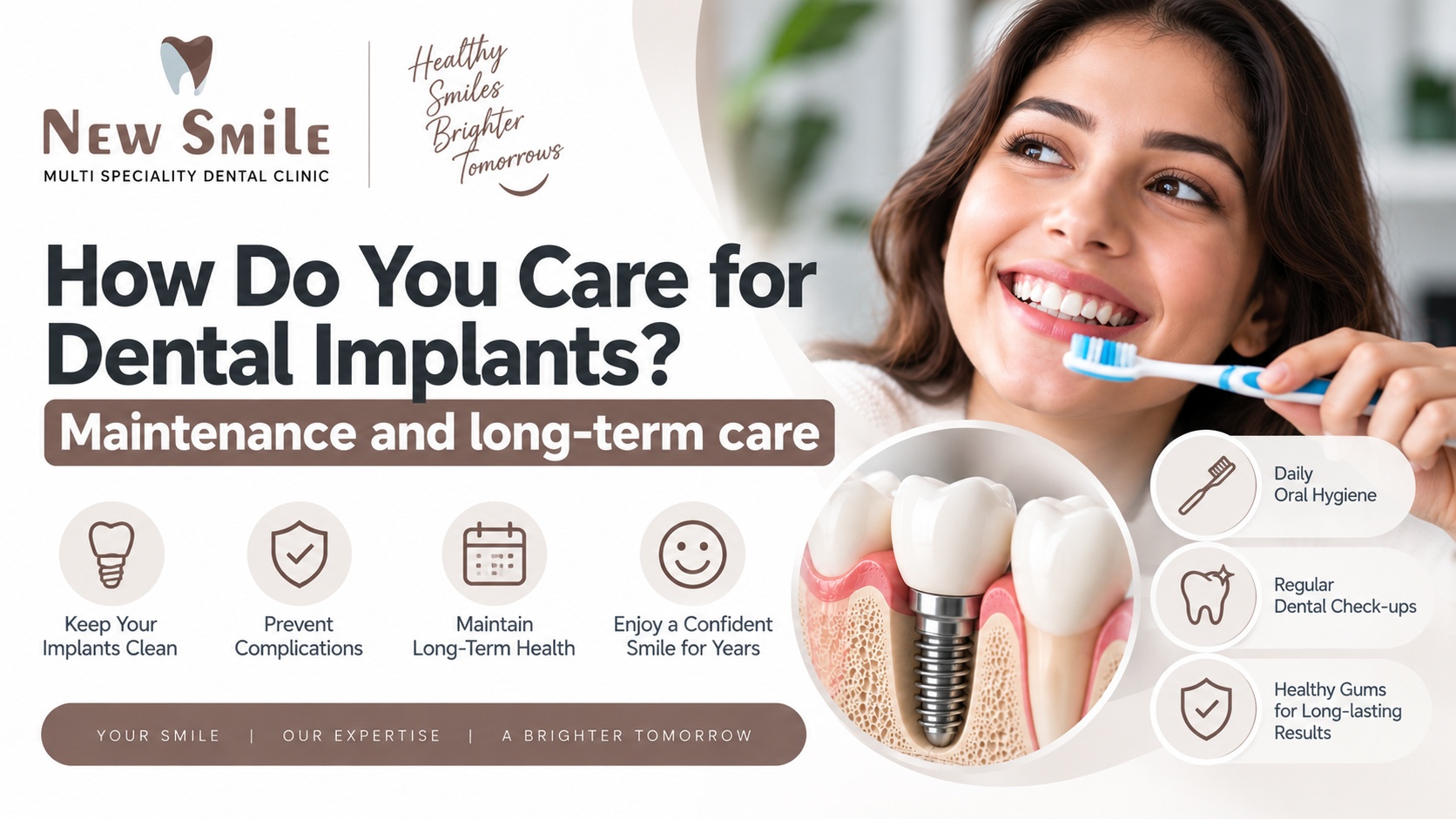
If you have a history of periodontitis, protecting your new dental implants requires lifelong dedication to oral hygiene:
- Brush Methodically: Brush twice daily for two minutes using a soft-bristled manual or electric toothbrush and non-abrasive fluoride toothpaste.
- Clean Interdentally: Clean between teeth and around implant collars daily using plastic-coated interdental brushes or specialised floss that will not scratch titanium components.
- Protect Adjacent Natural Dentition: Maintaining healthy gums across your natural teeth or teeth with root canal treatments prevents bacterial migration to implant sites.
- Schedule Regular Reviews: Attend professional cleaning and periodontal examinations every 3 to 6 months to detect any early signs of inflammation before bone loss occurs.
- Avoid Tobacco: Quitting smoking protects blood flow to your gums and substantially lowers the risk of implant complications.
- Seek Prompt Attention: Contact your clinic immediately if you notice bleeding, redness, localized swelling, discomfort, or any perception of looseness around your restoration.
How to Choose a Dental Implant Dentist in Ahmedabad
If you have previously experienced gum disease, choosing the right dental implant provider is particularly important. Consider the following criteria:
- Periodontal Expertise: Look for a team that thoroughly evaluates and prioritizes gum stability rather than rushing into surgical placement.
- Advanced Imaging Technology: Ensure the clinic utilizes 3D CBCT imaging and guided surgical protocols for precise assessment of bone quality.
- Comprehensive Diagnostic Standards: Choose a clinic that provides full periodontal charting, clear risk explanations, and transparent treatment alternatives.
- Dedicated Preventive Care: The clinic should emphasize long-term maintenance, offering structured recall schedules to safeguard your investment.
Dental Implant Assessment at New Smile Multispeciality Dental Clinic
At New Smile Multispeciality Dental Clinic in Ahmedabad, we believe that durable restorative dentistry begins with healthy foundational tissues.
If you have experienced bleeding gums, loose teeth, gum recession, or previous periodontal treatment, our dental team provides thorough, individualized evaluations. We assess your gum stability, examine 3D bone architecture, and discuss whether preparatory periodontal therapy, bone grafting, or direct implant placement is the right step for your oral health. Our goal is to provide honest, medically sound guidance tailored to your long-term wellbeing.
Frequently Asked Questions About Dental Implants and Gum Disease
Can you get dental implants with gum disease?
Yes, but active gum disease must be treated and fully resolved first. Patients with a past history of periodontitis can often receive implants once their gums and bone levels are stabilised.
Do you need to treat gum disease before getting implants?
Yes. Placing dental implants while active bacterial infection exists in the mouth significantly increases the risk of surgical complications, failed osseointegration, and early peri-implantitis.
Can dental implants be successful after periodontitis?
Yes. Clinical research confirms that patients with successfully treated periodontitis achieve high implant success rates, provided they maintain excellent oral hygiene and attend regular checkups.
Does gum disease increase the risk of implant complications?
Yes. A history of periodontal disease increases susceptibility to peri-implant mucositis and peri-implantitis, making diligent daily cleaning and professional maintenance essential.
Can you get dental implants with bone loss?
Yes. While bone loss requires careful planning, modern techniques such as bone grafting and sinus lifts can often rebuild sufficient bone volume to support stable implants.
Can you get dental implants if your gums are receding?
Yes, provided active disease is absent. Your dentist will evaluate the thickness of remaining attached gum tissue and may recommend soft-tissue grafting to optimize aesthetics and tissue protection.
Can people with diabetes get dental implants?
Yes. When blood sugar levels are well controlled, individuals with diabetes achieve implant success rates comparable to non-diabetic patients.
Does smoking affect dental implant treatment?
Yes. Smoking constricts blood flow to oral tissues, impairs healing, increases the risk of infection, and significantly elevates the likelihood of implant failure.
How long after gum disease treatment can implants be placed?
Timelines vary. Mild gingivitis may resolve in 2 to 4 weeks, while moderate to severe periodontitis typically requires 6 to 12 weeks of post-treatment healing before re-evaluation.
Can dental implants develop gum disease?
Implants cannot get natural cavities, but the surrounding gums and bone can develop inflammatory conditions called peri-implant mucositis and peri-implantitis.
What is peri-implantitis?
Peri-implantitis is a destructive inflammatory condition that causes progressive bone loss around an integrated dental implant. It requires professional clinical intervention.
How do you keep dental implants healthy after treatment?
Maintain consistent twice-daily brushing with soft bristles, clean between teeth daily with coated interdental brushes or implant floss, avoid tobacco, and attend clinical checkups every 3 to 6 months.
Are dentures an alternative if dental implants are unsuitable?
Yes. If clinical or anatomical factors make implants unsuitable, modern full or partial dentures and conventional bridges offer effective tooth replacement alternatives.
Where can I get a dental implant assessment in Ahmedabad?
You can contact New Smile Multispeciality Dental Clinic in Ahmedabad to schedule a comprehensive periodontal and dental implant consultation.
Conclusion
A diagnosis or history of gum disease does not have to end your hopes of restoring missing teeth with dental implants. While active periodontal disease must always be addressed, controlled, and resolved beforehand, modern restorative techniques allow many patients to become suitable candidates once tissue stability is achieved. Evaluating bone support, maintaining excellent oral hygiene, and managing lifestyle factors like smoking are key to long-term success.
If you are considering dental implants in Ahmedabad and want clarity on your gum health, New Smile Multispeciality Dental Clinic provides thorough clinical assessments to help you make informed, confident decisions for your oral health.
Book Your Implant & Periodontal Consultation
Concerned about gum disease, receding gums, or bone loss? Schedule a personalized clinical evaluation with our experienced dental team in Ahmedabad.
New Smile Multispeciality Dental Clinic • Ahmedabad, Gujarat